Healthcare Is Moving Beyond Isolated Moments
Healthcare has long been organized around episodes: a visit, a scan, a procedure, a discharge. Each moment is documented, stored, and acted on, often effectively in isolation.
But patients don’t experience care that way.
For them, care is a continuum. A journey that unfolds over time, across locations, specialties, and care teams. What happens before and after a single encounter often matters just as much as what happens during it.
As healthcare systems grow more complex, spanning hospitals, outpatient centers, ambulatory sites, specialty clinics, and partner networks, the limitations of siloed information become harder to ignore.
The industry is increasingly recognizing that high-quality care requires more than excellent point solutions. It requires a complete, connected picture of the patient.
The Industry Shift: From Encounters to Journeys
Across healthcare, several trends are pushing organizations toward a more holistic view of patient care:
- Care is becoming more distributed. Patients move between health systems, outpatient centers, and virtual care settings more frequently than ever.
- Specialization is increasing. A single patient may interact with cardiology, radiology, vascular, oncology, and primary care, sometimes within weeks.
- Value-based care models emphasize continuity. Outcomes, efficiency, and patient experience depend on understanding the full context, not isolated data points.
- Patients expect coordination. Fragmented care is increasingly visible and frustrating to patients navigating complex health journeys.
Following One Patient’s Path
Consider a patient with cardiovascular concerns.
Their journey may include:
- An initial ER visit with a CT scan
- Follow-up echocardiography at a cardiology clinic
- Prior imaging was performed years earlier at a different hospital
- Ongoing monitoring through outpatient imaging.
- Consultations across multiple providers and locations
Each step generates imaging, reports, measurements, and clinical decisions. Yet too often, these pieces live in separate systems, accessible only within the walls where they were created.
When clinicians can only see parts of the story, they are forced to make decisions without full context. That gap doesn’t reflect a lack of expertise; it reflects a lack of connection.
Seeing the full picture means being able to follow the patient across:
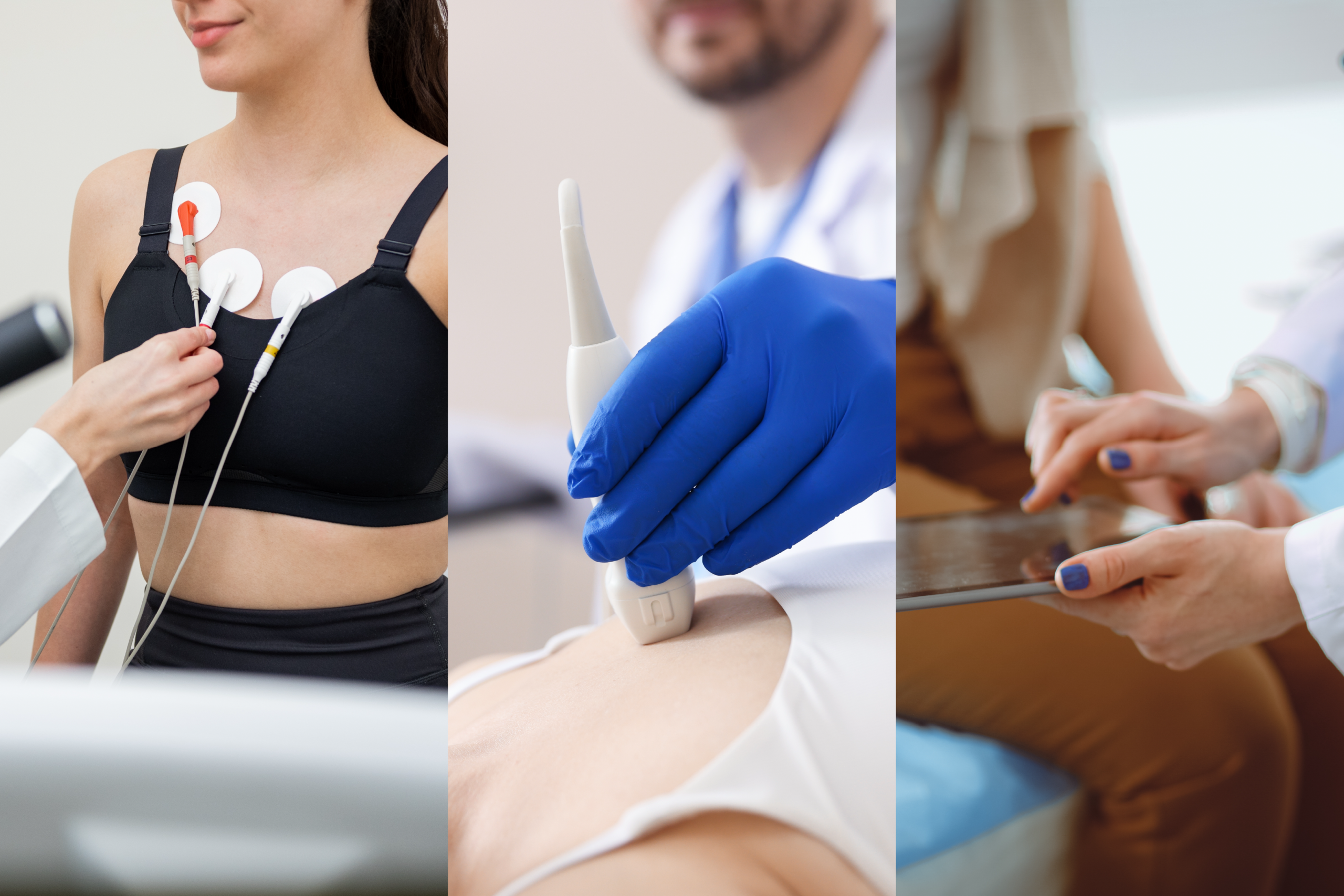
- Modalities (CT, MR, echo, ultrasound, ECG)
- Locations (hospital, clinic, imaging center)
- Time (historical exams alongside current studies)
- Care teams and partners
This is what patient-centric care through enterprise imaging looks like in practice.
Why the Full Picture Matters
A connected view of imaging and clinical data delivers real advantages:
Better Clinical Decision-Making
When prior studies and related imaging are readily available, clinicians can:
- Reduce redundant exams
- Identify meaningful changes over time
- Improve diagnostic confidence
More Efficient Workflows
Disconnected systems create manual workarounds, phone calls, exports, re-uploads, and delays. A unified view reduces friction and saves time.
Stronger Collaboration
Cloud PACS allows care teams across specialties and locations to work from the same information, improving communication and alignment.
Improved Patient Experience
Patients don’t want to repeat their story or their imaging every time they see a new provider. Continuity builds trust.
Smarter use of Technology
Advanced analytics and AI tools are most effective when applied to complete, longitudinal datasets rather than isolated snapshots.
Imaging as the Thread That Connects Care
Medical imaging plays a unique role in the patient journey.
Images are often:
- The first indicator of disease
- The basis for diagnosis and treatment planning
- The reference point for tracking progression or response to care
Because imaging touches nearly every specialty, it has the potential to act as the connective tissue across care settings. But only if imaging data is accessible, interoperable, and organized around the patient, not the department.
This requires rethinking how imaging systems are designed and deployed.
Moving From Systems to Stories
Historically, imaging infrastructure has been built around:
- individual departments
- specific modalities
- local storage and workflows
But patient journeys don’t respect those boundaries.
To support a patient-centric model, medical imaging environments must be able to:
- unify data across modalities and sites
- support collaboration across specialties
- integrate with broader clinical and operational systems
- adapt as care models evolve
In other words, the focus shifts from managing systems to enabling the story of a patient’s care over time.
Where ScImage Fits In
At ScImage, this philosophy shapes how enterprise imaging is approached.
Rather than treating imaging as a collection of isolated archives, ScImage focuses on enabling longitudinal, patient-centric access to imaging data across specialties, locations, and partners. The goal is not just storage or retrieval, but context—helping clinicians see where a patient has been and where they are headed.
By supporting interoperability, cloud-based access, and flexible integration with existing systems, ScImage helps healthcare organizations move closer to a model where imaging follows the patient, not the other way around.
This approach doesn’t replace clinical judgment or workflows; rather, it supports them. It allows care teams to spend less time searching for information and more time using it.
The Bigger Picture
Seeing the full picture of patient care isn’t about a single technology or PACS system. It’s about aligning infrastructure with how care actually happens.
As healthcare continues to decentralize and specialize, the ability to connect information across the patient journey becomes a defining capability. Organizations that invest in this connected view are better positioned to deliver care that is not only efficient and advanced, but truly patient-centric.
Because in the end, patients don’t experience healthcare as encounters or modalities but as a journey.