Artificial intelligence has become impossible to ignore in healthcare. Across the industry, AI in medical imaging is positioned as the next major transformation, promising faster reads, smarter workflows, and improved outcomes.
Yet for many healthcare organizations, the reality looks different.
Despite rapid innovation, the market remains fragmented, adoption is inconsistent, and the return on investment isn’t always clear, especially as reimbursement models continue to evolve. The challenge isn’t whether AI works but how AI is integrated, operationalized, and sustained within real clinical workflows.
The Industry Challenge: Moving Beyond Fragmented AI
 The Industry Challenge: Moving Beyond Fragmented AI
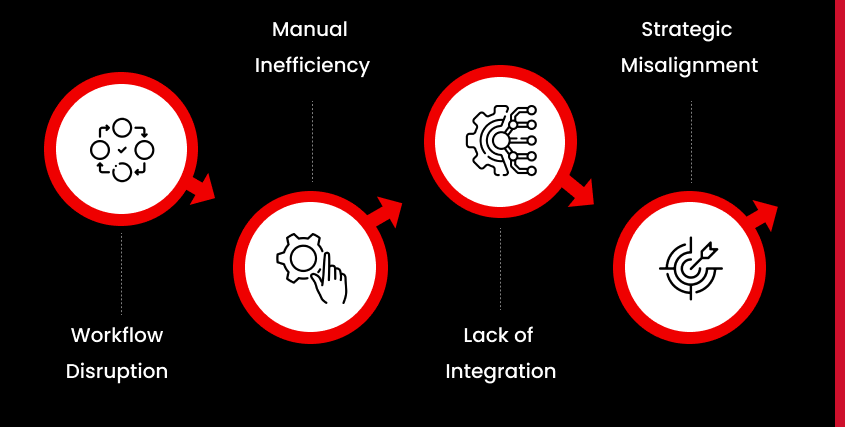
Imaging leaders today are navigating a crowded, fragmented AI landscape that often complicates rather than simplifies clinical practice. Key obstacles include:
- Workflow Disruption: Standalone tools that operate in silos outside of core clinical pathways.
- Manual Inefficiency: Disconnected point solutions that require extra steps and manual intervention.
- Lack of Integration: Inconsistent AI implementation across different modalities and departments.
- Strategic Misalignment: Difficulty connecting AI investments to tangible reimbursement or operational goals.
As healthcare shifts toward value-based care, the standard for AI in cardiology and enterprise imaging has evolved. It is no longer enough for AI to analyze images; it must actively reduce friction, ensure diagnostic consistency, and drive measurable patient outcomes.
The result today is a market full of algorithms but often lacking cohesion.
The Missing Link: AI Must Work Within the Workflow
The most effective AI in medical imaging is often invisible. It doesn’t interrupt clinicians or require them to change how they work. Instead, it enhances workflows quietly, supporting decisions, automating routine tasks, and optimizing performance behind the scenes.
This belief shapes ScImage’s approach to AI across PICOM365, our cloud-native PACS software and enterprise medical imaging platform.
Rather than treating AI as a single feature or vendor dependency, PICOM365 supports AI through a three-pronged strategy designed for flexibility, interoperability, and long-term value.
1. Native AI: Built-In Intelligence
Some of the most powerful AI capabilities are the ones you barely notice.
PICOM365 includes native AI embedded directly into the platform architecture, enhancing system performance, security, and clinical efficiency without disrupting workflows.
Optimized Performance & Reliability
AI-driven monitoring continuously tracks system performance, proactively identifying and correcting potential issues. Automated alerts help optimize uptime and system reliability, critical for organizations relying on cloud PACS and enterprise imaging solutions.
Built-In Security Intelligence
Operating within Microsoft Azure, PICOM365 leverages AI-driven security monitoring and threat detection to identify anomalies and trigger immediate responses to potential risks, supporting compliance and protecting patient data.
Native Clinical & Operational AI Tools
PICOM365 also includes built-in AI capabilities designed to support reporting, documentation, and reimbursement, including:
- AI Review & Summary: Analyzes cardiac report language and measurement data to identify contradictions, generate clinical and patient summaries, support peer review, and suggest ICD-10 codes to optimize billing.
- AI Similarity Index: Compares current and prior ECG interpretations, highlighting similar content based on user preferences to improve consistency and efficiency.
These capabilities demonstrate how AI for PACS software can deliver value without adding complexity.
2. Seamless AI Integration: Open, Flexible, and Workflow-First
Healthcare organizations shouldn’t be locked into a single AI vendor or forced to rebuild workflows every time technology evolves.
PICOM365 enables seamless AI integration with a single click, allowing users to launch and interact with the AI solution of their choice directly within the imaging workflow.
Whether integrating with established leaders or emerging innovators, PICOM365 ensures:
- Secure interoperability
- Efficient data exchange
- No workflow disruption
This approach supports true AI integration for medical imaging, allowing AI to function as part of the PACS workflow, not a separate destination.
3. The AI Pathway: Choice, Control, and Scalability
Every healthcare organization has different clinical priorities, and those priorities evolve over time.
PICOM365’s AI Pathway provides an agile, cloud-based framework that automatically connects imaging data to AI-powered analysis and reporting tools. Organizations choose which AI solutions to deploy, and PICOM365 integrates them seamlessly into the workflow.
This model supports:
- Best-of-breed AI adoption
- Multi-vendor flexibility
- Scalable enterprise imaging strategies
Instead of adapting workflows to AI, AI adapts to the workflow, a critical distinction for sustainable adoption.
Future-Proofing AI in Medical Imaging
One of the biggest challenges with AI today is uncertainty.
New algorithms, vendors, regulations, and reimbursement considerations continue to emerge. No organization can predict exactly where AI in healthcare imaging will land long-term. Investing too heavily in rigid, single-vendor solutions increases risk.
That’s why future-proofing matters.
PICOM365 is designed to minimize long-term risk by prioritizing:
- Interoperability over lock-in
- Workflow integration over point solutions
- Flexibility over prediction
As AI capabilities evolve, organizations can adopt new tools, retire others, and refine their AI strategy without re-architecting their PACS software or enterprise imaging environment.
You don’t need to know exactly where AI is headed to be ready for what’s next.
From AI Hype to Real Clinical Value
The healthcare imaging industry doesn’t need more AI buzzwords. It needs AI that works.
That means:
- Supporting clinicians instead of interrupting them
- Improving efficiency, accuracy, and documentation
- Aligning with reimbursement realities
- Integrating seamlessly across medical imaging solutions, cloud PACS, and enterprise systems
When AI is implemented thoughtfully, it fades into the background, quietly improving outcomes while allowing care teams to focus on what matters most.
At ScImage, we believe the most effective AI doesn’t announce itself.
It simply makes everything work better.